
Choosing the Right Window Tint Shade for Your Car
Window tinting isn’t just about making your car look sleek. In Australia, it’s about heat control, glare reduction, UV protection, privacy, and driving comfort. But one of the most common questions drivers ask is this: how dark should I go?
Choosing the right window tint shade for your car isn’t as simple as picking the darkest option available. There are legal limits, lifestyle factors, and performance differences to consider. Making the right decision ensures you get the benefits without compromising safety or compliance.
Understanding Window Tint Percentages
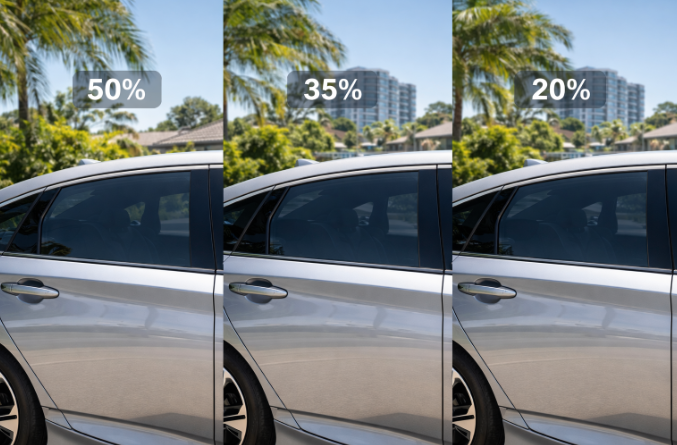
Window tint shade is determined by the amount of visible light that passes through the glass, known as Visible Light Transmission (VLT). The percentage refers to how much visible light passes through the glass.
50% VLT allows half of the visible light to pass through the glass, resulting in a lighter tint appearance
35% VLT allows 35% of light in and is considered moderate
20% VLT allows 20% of light in and appears dark
5% VLT is extremely dark and often referred to as limo tint
The lower the number, the darker the tint. However, darker does not automatically mean better. The goal when choosing the right window tint shade for your car is a balance between heat rejection, visibility, safety, and legal compliance.
Legal Tint Limits in Australia
Each Australian state and territory has regulations regarding window tint darkness. Generally, front side windows must allow at least 35% VLT, rear windows can usually be darker, and the front windscreen is restricted to a top strip only.
Going darker than legal limits can result in defect notices, fines, insurance complications, and roadworthy issues. This is why working with professionals matters. Experienced installers understand state regulations and ensure your vehicle stays compliant.
Factors to Consider When Choosing the Right Window Tint Shade for Your Car
Australian Climate Conditions
Australia experiences some of the highest UV levels globally. If you park outdoors often, you’ll benefit from higher heat rejection films. Modern ceramic films can reject significant heat even at lighter shades like 35%, meaning you don’t need an extremely dark tint to stay cool.
Driving Habits
Consider how and when you drive. Do you drive mostly during the day or frequently at night? Visibility matters. A darker tint can reduce night-time clarity, especially in poorly lit areas. If you regularly drive in rural or low-light environments, a moderate shade is often the safer choice.
Privacy Needs
If privacy is important, darker rear windows can help reduce visibility into the cabin. Families, tradies carrying tools, and rideshare drivers often prefer added rear privacy while keeping the front legally compliant.
Aesthetic Preferences
Tint changes your vehicle’s appearance. Lighter shades provide a clean and subtle look. Mid-range shades offer a balanced, factory-style finish. Darker shades create a bold and premium appearance. Matching the tint to your vehicle’s colour and trim helps achieve a cohesive result.
Heat Rejection vs Darkness
One common misconception is that a darker tint automatically means better heat reduction. Modern film technology, particularly ceramic films, can block infrared heat regardless of shade. This means you can choose a legal 35% tint and still achieve excellent temperature reduction.
When choosing the right window tint shade for your car, focus on film quality rather than simply selecting the darkest option.
Popular Tint Choices in Australia
Most drivers choose one of the following options:
35% tint is the most popular choice. It is legal for front windows in most states, offers balanced privacy, and maintains good night visibility.
20% tint is commonly used on rear windows. It provides strong privacy and a sportier appearance.
50% tint is subtle and ideal for drivers who prioritise visibility while still gaining UV protection.
A professional consultation can help determine what works best for your vehicle and lifestyle.
Safety Considerations
Safety should always come first. An extremely dark tint can reduce visibility at night, increase the risk of blind spots, make reversing more difficult, and affect driver awareness in poor weather.
Professional installation ensures a clean application without distortion or bubbling, which can also impact clarity. Many drivers trust experienced providers like Pro Spec Detailing to guide them through compliant and performance-driven tint options.
Matching Tint Shade to Vehicle Type
Different vehicles benefit from different tint approaches.
Sedans often look best with 35% front and 20% rear for a balanced finish. SUVs benefit from darker rear tint to complement larger glass areas. Utes used by tradies often require a darker rear tint for added equipment security. Electric vehicles benefit from lighter ceramic tint with high infrared rejection to preserve battery efficiency while maintaining visibility.
Choosing the right window tint shade for your car depends heavily on how you use your vehicle.
Why Professional Advice Matters
Online advice won’t consider your specific state regulations, vehicle model, driving patterns, climate exposure, or personal comfort preferences.
Professionals assess these factors before recommending a solution. At Pro Spec Detailing, customers receive tailored advice based on real Australian driving conditions rather than generic recommendations.
For drivers seeking a smart, compliant upgrade, Pro Spec Detailing provides expert installation and performance-focused film options.
Long-Term Value of Choosing the Right Window Tint Shade for Your Car
Selecting the correct shade improves more than appearance. It reduces interior fading, lowers cabin temperatures, minimises glare, improves daily comfort, enhances privacy, and maintains legal compliance.
Poor shade selection can lead to dissatisfaction, especially if night visibility becomes compromised.
Making a Smart Choice About Choosing the Right Window Tint Shade for Your Car
If you are unsure, a practical approach is to select the darkest legal option for your front windows and adjust the rear tint to suit your privacy needs. This keeps you compliant while maximising comfort.
Before making a final decision, consider how often you drive at night, where you park daily, who regularly rides in your vehicle, and your overall comfort preferences.
Choosing the right window tint shade for your car is about achieving a balance between performance, safety, appearance, and regulation. When done correctly, tint becomes one of the most practical upgrades for Australian drivers.
